RSS Feed

Know That Kid ASAP

As a teacher, when the college semester is limited to 25 classes or the middle/high school marking period is ten to twelve weeks, I found it crucial to learn as much as I could about each student as early as possible. Here are some strategies that I used for all ages.

  1. Name That Face Before classes begin, review class lists, get student photos to be able to match the face with the name. Have index cards and markers so each student makes a name card to place on his/her desk; that facilitates you learning names and the students learning each other’s as well.
  2. Intro Letter and Task Also before classes begin, send a short, pleasant letter/e-mail to each student introducing yourself, reviewing the agenda for the first couple of days and asking them to collect a small number of items for a local homeless shelter (3 toothbrushes or 3 bars of soap or 3 pairs of athletic socks). Tell them to be prepared to discuss how they managed to get these items. This task serves as an icebreaker and gives insight about each student solved the problem of procuring the goods.
  3. The Questionnaire During the first class, I hand out a questionnaire that is somewhat lengthy. It’s due at the beginning of the next class. I ask what they liked best and least about English class. Also, what do they think is important for me to know about them in order to better teach them? What books have they read recently? What do they think makes a person a “good reader”? What do they think makes a student a “good writer”? I ask them to tell a little about the best paper they ever wrote. What is unique about their style of learning that would be helpful for me to know? What do they want to be doing in four years? What makes them happy? What scares them? They are told to write in complete sentences and answer each question fully.

And lastly, most importantly, what questions do they have for me… and I leave a large space for them to write as many questions as they want. I promise to answer their questions promptly. I pour over the surveys once they’re submitted and make notes in my grade book regarding anything I can glean from the student’s responses that will help me teach them. For example, next to StudentX’s name I might write: says hates English, has ideas but can’t write, likes to read books she chooses herself, not assigned ones, many mechanical errors. My work is clearly laid out for me.

Knowing that information on Day Two is an incredible asset. I make time to meet with each student and address the issues that jump out at me. It’s an open discussion and a friendly, professional way to start the semester. It diffuses problems before they begin. Students are often surprised that a teacher would care to ask these questions and begin to see that this learning process is a two-way street requiring effective teamwork between teacher and student.

  1. Define Your Recipe for Success: I clearly list what I believe is necessary to succeed in my class in the class syllabus. Here is a sample of the ingredients:

-Show up on time and fully prepared to work and think hard.

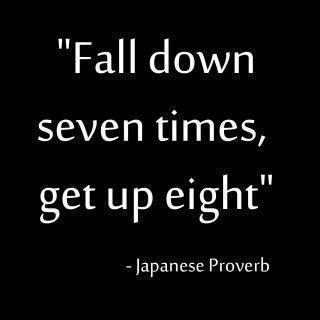
-Mistakes are not signs of weakness. They’re data to use and an opportunity for learning. Don’t be afraid of them.

-Good students ask for help and for lots of feedback on their work.

-If you try hard, learn from your errors, and persist, you can succeed.

-Consistent effort and effective strategies are the main determinants of success.

-Writing is rewriting.

-Reading for pleasure results in improvement of many skills: vocabulary, comprehension, synthesis. Get addicted to reading.

-Ask questions—of yourself, or your textbook, or others.

-Push beyond the obvious.

-Be invested in your own education.

This “recipe” eliminates ambiguity about my priorities. I want them to be fully engaged and fearless. I make that clear.

5. Office Hours and Scheduled Appointments: During the first two weeks of classes, I make it a point to meet individually with each and every student. It gives us an opportunity to review what is expected and to address any questions or worries. We also map out a game plan of what specific goals the student has for this class and what particular skills need special attention. It’s a way to catch and eliminate problems of the past and move forward as a successful student. Yes, this is time consuming, but it is well worth it; it thwarts problems that most likely would have surfaced later in the semester when there might not be time to handle them.

What I like about this whole “ramping up” process is that it significantly shortens the time we need to get acquainted and hastens the time we get to start working on class work. It also makes the teacher aware of information that either wouldn’t be known or would take valuable weeks to discover.

And I do love the questions they ask me…some of my favorites:

Why do you teach?

Do you always have so much energy?

What is your favorite book, TV show, movie, ice cream?

Are you really going to answer my questions? Really?

P.S. If you have already started classes, it’s never too late to put any of these practices into action.

Classroom Rules For All Ages

Posted on

As a teacher I worked with students of all ages from elementary school, through middle and high school and finally at the university level. Without fail, on the first day of class I’d layout and discuss rules that would guide the semester.

Yes, there would be a listing of books to be read, topics to be covered, forms of writing to be explored, and problem solving techniques. Most importantly, however, was the attitude and process that would be in play.

As a child, I hated the “If you don’t know what you did wrong, I’m not going to tell you” approach—it was deadly. I’m a great fan of setting clearly defined expectations at the beginning. Although the wording might have changed over the years as I moved from teaching ten year-olds to twenty somethings, the messages were consistent.

Here’s the list of “rules” I have collected from various sources over almost forty years. I reviewed one by one on the first day of class… and kept the list posted in a highly visible spot all year long:

  1. Mistakes help us learn.
  2. You’re not supposed to understand everything the first time around. Critical thinking, pushing beyond the obvious, and perseverance are what count.
  3. Good students ask for help and for lots of feedback on their work.
  4. Consistent effort and effective strategies are the main determinants of success.
  5. Everyone is capable of high achievement, not just the fastest ones.
  6. If you try hard, learn from your errors, and persist, you can succeed.
  7. Mistakes are not signs of weakness. They’re data to use. They’re an opportunity for learning. Don’t be afraid of them.

I’m noticing that these are “rules” that I seem to use everyday, no matter what the venue. Whether it’s reading a challenging book like Jonathan Safran Foer’s new, unusual Tree of Codes or attempting a complicated sweater design or a sudoku puzzle, the rules help me push beyond chaos and get to something meaningful. Getting rid of the fear of failure and using our own learning experiences as a tool is one of the best lessons we can learn.

Best for Last

Posted on

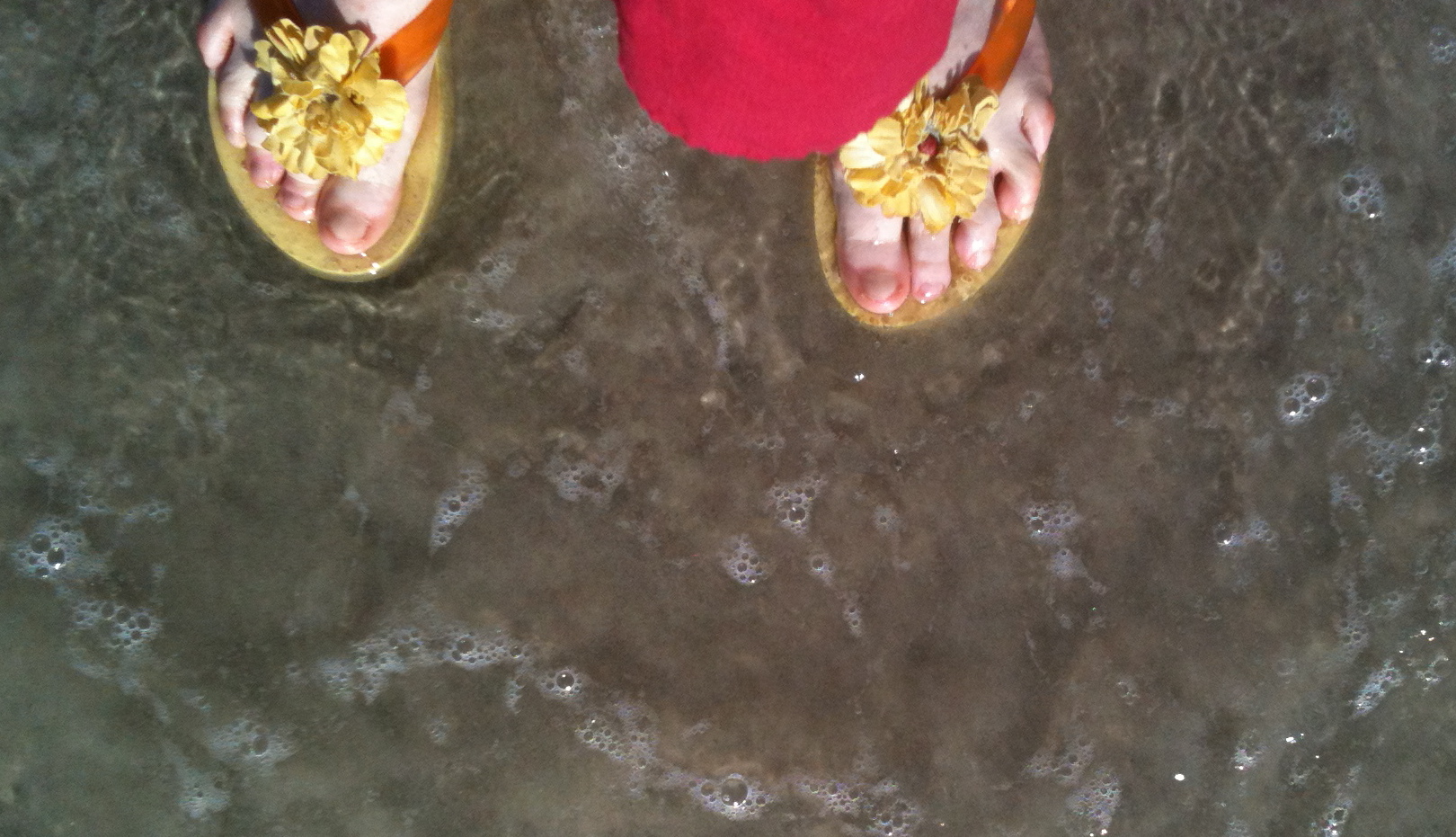
Happy Feet

The last week of August at the beach is the ripest, juiciest of all. Maybe that’s because the end of the long hot days is near, and the nip is already in the night air. Today Woodneck Beach was absolutely perfect, more perfect than usual.

My Favorite Place on Earth

At five o’clock there were still a few families lingering and languishing in what was left of the day and the season. The sun did its sparkling twinkles on the water, and the waves tickled toes.

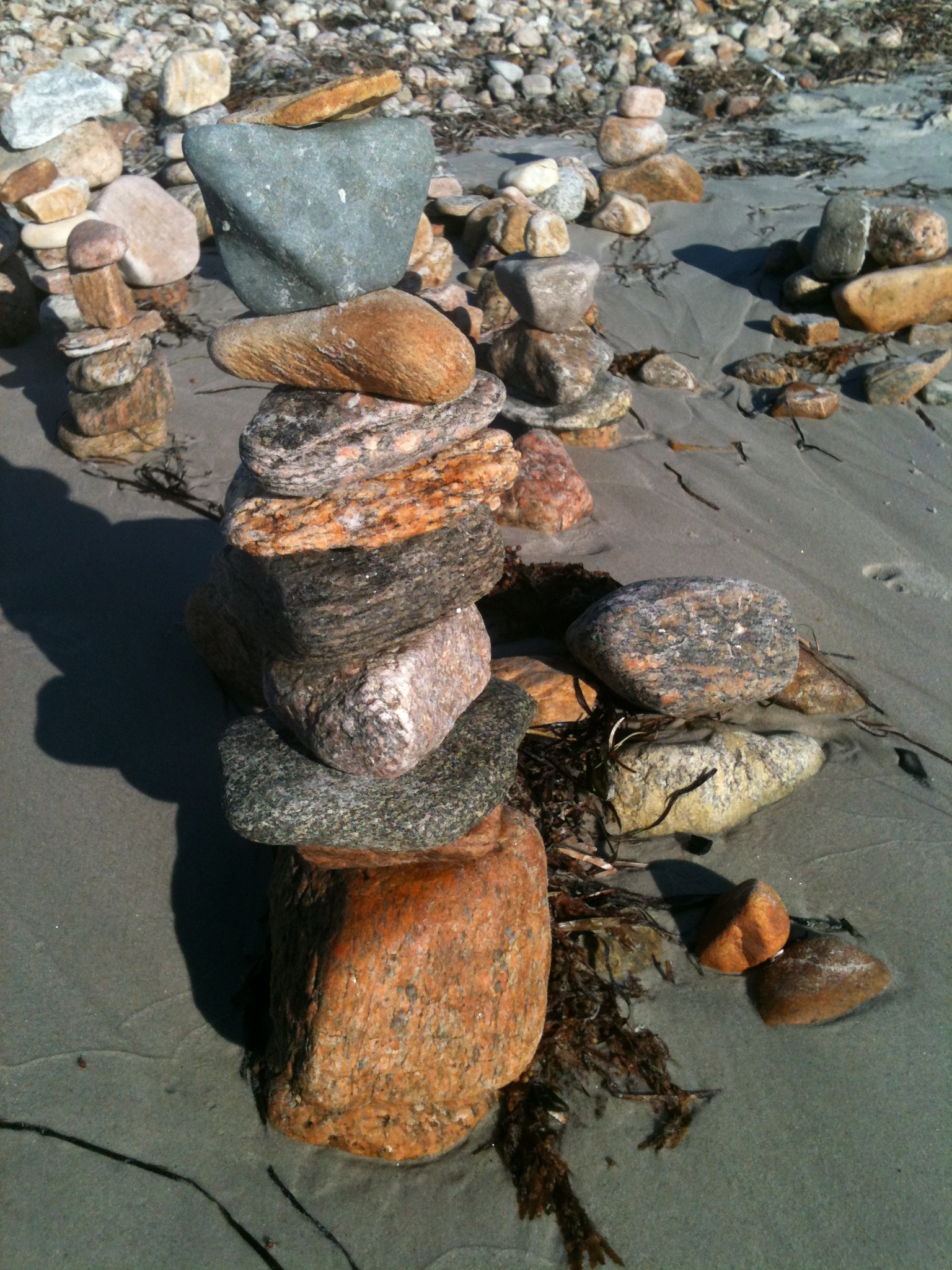
Stone Puzzle

The rocks always catch my eye. I love the mosaic they make when they’re flat on the beach. Every once in a while someone creates a sculpture—we all walk around it and don’t disturb the art. Of course, I filled a small cloth bag with shells, rocks and assorted treasures to scatter across the walkway to the house. Sea glass on a path to the front door is a welcomed surprise all year long.

Built It

Tomorrow we’ll head to the beach earlier, sit in our chairs, books in hand, camera in beach bag, maybe a few snacks and we’ll soak up the last of summer and look forward to fall.

Top Ten List for Kids Leaving Home for College

Posted on

1. Make real connections with your professors. Get to know them and make sure they know you. Learn ALL you can from them.  You’re paying for an education.

2. Learn when to invite friends into your room and when you need to be alone.

3. Be true to yourself. Don’t be a follower. Use your spine.

4. Bring your quilt/blanket and pillow from home. Sleep in your own bed—alone.

5. Get enough sleep. You’ll need it. People become incredibly stupid when they’re sleep deprived.

6. Avoid illegal substances because you also act stupid when you’re under the influence.

7. Keep up your own private, self-selected reading. It’s something you do just for you, even if it’s only ten minutes a day.

8. Buy 30 pairs of underwear because you won’t do laundry for quite a while. Going commando gets tired very fast.

9. Use a calendar, electronic or the old fashioned paper kind. Write down everything that’s due, schedule time to study each subject.  Then actually use the calendar.

10. Keep in touch with people who love you.

Bored…Clean the Toilet!

Posted on

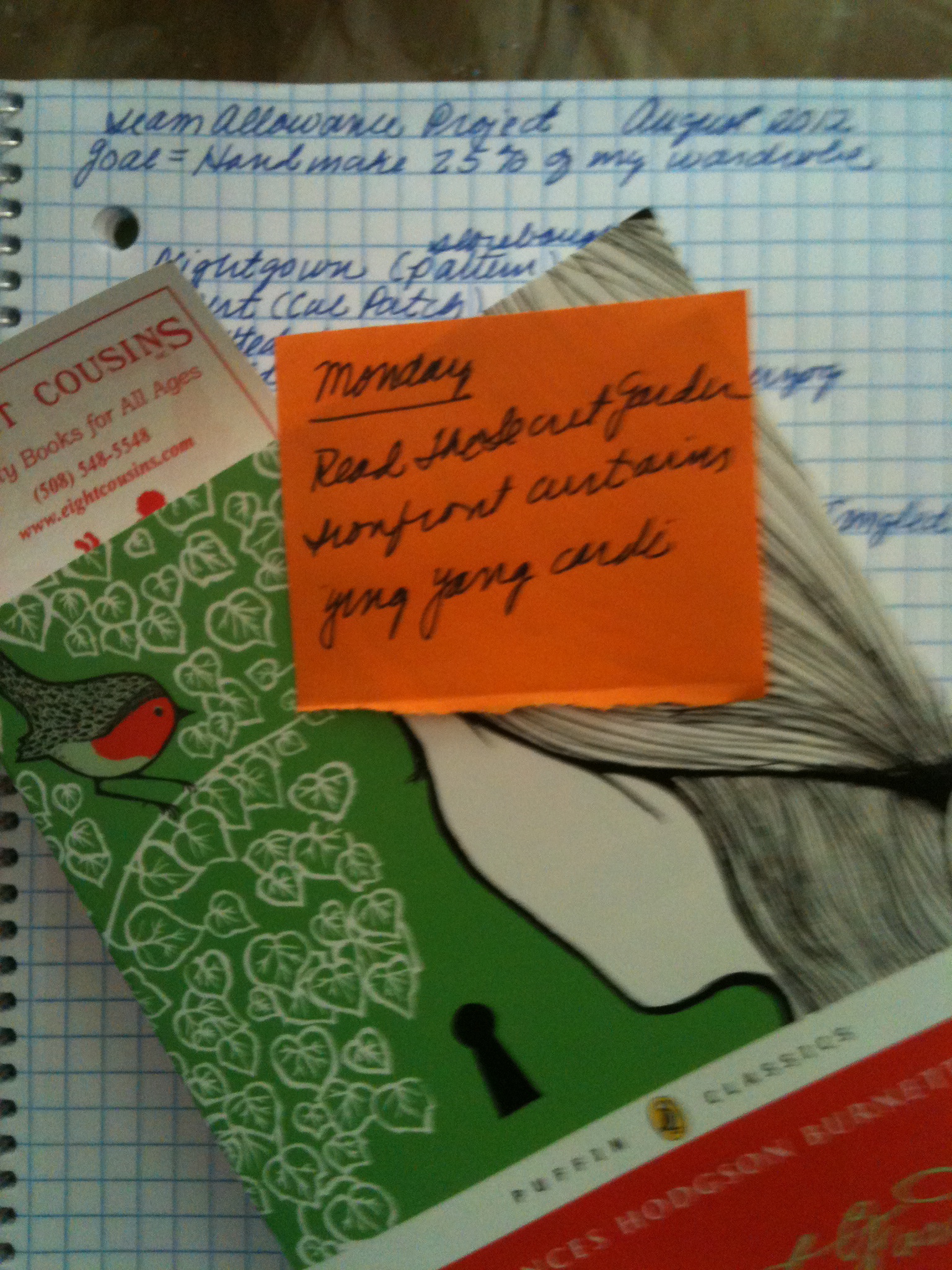
Monday’s Short List

Being bored was not permitted in my childhood household. Any version of or indication that the words “I’m bored” were to be voiced were met with an immediate command to grab a rag and wipe the baseboards or, worse yet, clean the bathrooms. So, I learned not to voice it and never to think it.

My days were always jam packed with things to do; some were required tasks dictated by firm looks, but most were fun adventures in my head just waiting to happen. I loved getting up early and riding my bike around the neighborhood, feeding Papa Louie’s chickens, reading a book under the big trees in the front lawn, climbing up into my tree house and looking straight up at the sky through the sassafras leaves…there was never a dull moment. None of these events are earthshaking or monumental, just little moments that collect to make a fine, non-boring day. I also learned the value of solitude. I gave myself time to myself. That was a lesson worth learning.

As I got older, my stack of books on my nightstand got taller. The local bookstore and library became favorite haunts.  I chose a bookstore as a client and teaching as a career so I could get even closer to the good stuff. A similar pattern erupted with fabric and yarn and cookware. There’s always something that wants to mix and hatch—and I’m quite excited about it all. Mind you, it’s not non-stop busyness—there’s ample quiet, downtime to recharge my creative batteries, daydream, and sleep!

Having an overflowing list of possibilities is how I function. Yes, I have to work to limit the overwhelm and chaos, but it’s worth it. I make lists, but have learned to keep them short. Three items on a small scrap of paper guide my daily adventures and give some modicum of focus. There’s no real obligation to complete the list or even to look at it… it’s just a suggestion. I do much better with suggestions rather than ultimatums. At age sixty, I enjoy “being in the moment” more than ever and let that govern my schedule.

When I go to a restaurant or any kind of food purveyor, I often ask… “What should I not leave today without trying.”  That opens new doors and lots of windows every time. Spotify gives me the chance to play “what’s new” and try to figure out if I want to hum the lyrics. Pinterest provides fresh visual images and interesting ideas from around the world. When I was in the classroom, every day was a new adventure with lots to think about during and afterwards. I appreciate the “rush” of pushing the boundaries of my comfort zone. Maybe that’s why I’m never bored… who knows.

This time of the year marks new beginnings for me. It’s probably because I always connect the end of summer with the beginning of the school year. It’s an opportunity to look at time spent, and look forward to how I want to spend it in the future. Assess, reevaluate, re-think, create anew. Now that I’m retired, this ritual is more rich and exciting. What do I want to accomplish this Fall? The challenge is to keep the list short and never boring:

1.    Design and create 25% of my wardrobe by hand.

2.   Exercise every day (oh bullshit… maybe every other day)

3.   Read a book a week. Yes!

4.   Play in the garden.

5.    Waste less time on the internet.

That’s it. I’d love to hear how you broach Fall and any issues with boredom. Please feel free to leave a comment.

Half Way to 120 Years Old

Posted on

This week I turn 60 years old—I like to think of it as half way to 120. I’ve never been the type to fret about birthdays or aging. There’s so much I’ve got left to do as long as I’m here. That’s why I like to think about it as half way to 120.

First on my list is to continue to take good care of myself. Self-care has never been my forte. This past year it has been a priority, and I’m getting better at eating healthy, exercising and de-stressing. Being at the Cape has been a help; the world moves slower here, and I take time to do things that are good for me. There will be time to enjoy my hubby and the kids. The girls are all grown up, and they’re so much fun to be with. I’m a lucky lady.

The community here is a wonderful mixture of artists, intellectually curious minds, and generally sincere, good folks. My book group, knitting circle and to-be-formed spinning group bring out the best in me. So does a visit to the Farmer’s Market and the Falmouth Library. Having dinner at the Quarterdeck with Whitney as our all time, fabulous waitress is a regular date.

There are books to be read, writing to be done, creative projects to hatch, and gardening to tend. I promise not to get old and grumpy. There will be no complaining about the weather or saggy skin or a big ass. I will not dye my hair shoe-polish brown or wear orange lipstick. There will also be no bitching about stuff on television. I won’t be undergoing any plastic surgery or liposuction, but I will be eating more veggies. I will spend less time on the internet and more time daydreaming.

I’ll design and create most of my own clothes—and actually wear them. There will be fewer pieces in my closet, but they will be good looking and well-loved. There will be shelves with empty space on them and cupboards with room to spare. I’ll have less stuff, more time, less agita, more creativity and no headaches. There will be fewer rules and more coloring outside of the lines. That’s what turning half way to 120 will be for me. Oh, yes, there will be cake!

We Do Tunes…

Posted on

We don’t pick out silver patterns together or make a ritual of attending fashion shows or church services. The parent/daughter bonds in my family don’t have to do with jewelry, sports, or religious events. We do tunes.

Yes, that’s right, three generations connect through music. And we’re all amateurs who usually mangle the original lyrics.

When I was young in the ‘50’s, my Dad sang while we did the dishes nightly. He washed; I dried. At the time, I didn’t think about it, just sang along with “Pardon me boy, is that the Chattanooga choo choo?” and “Feuuuuuuuuudili-yaka-saki want some seafoooooood Maaaaamama.” The words didn’t make much sense, but sense didn’t have much to do with the ritual. We sang until the dishes were back in the cupboards and it was time to finish my homework. This was just something we did together every night without thinking about it. We sang.

In the morning, Dad bellowed “opera” while he shaved. He sang in Italian, and I mimicked the words. For years I sang “his “opera before hearing the Three Tenors sing on PBS. They sang different words. I immediately called Dad to find out if they were singing in a different dialect; he confessed that he made up his words and wondered what the real ones sounded like. I still like his best and continue to sing them, even though I’m probably saying something like “I fell in love with your armchair and the boats fly south.”

It’s no surprise that my husband and I sang unconventional lullabies to the girls when they were babies. “Rocky Raccoon” and “Sweet Baby James” ruled the house. They were well worn and part of our history. David and I met when the first James Taylor album was released. When he went out of his way to deliver a copy of the printed lyrics to my college mailbox, I knew it was the beginning of a beautiful relationship! More than forty years later, we hum those same songs together.

Frank Sinatra was also in our repertoire. His music was usually reserved for long car rides. “Lady is a Tramp”, I’ll Never Smile Again”, “I get a Kick Out of You” are just a few favorites. We knew most of the words, and mumbled the ones we weren’t sure of. Years later these same songs were on the playlist when my husband and two young daughters drove to the Cape every weekend. There was never a debate about which tape went into the deck when the car was packed. It was a ritual. Today we scramble to find a tape player for the girls to hear the “old Sinatra” tape—the one David recorded when Ron Della Chiesa broadcasted on Sinatra’s 70th birthday. They want to download it to their iPods.

As the girls became teenagers, I wondered if we’d continue to share tunes. For a while, when Christine Aguliera and In Synch were in vogue, I doubted it. Then our older daughter wanted to attend her first Pearl Jam concert. My going was not my choice; I lost a coin toss with David and as overprotective parents, we were not sending our first born to a huge venue with unknown drivers to meet her demise. Tsk Tsk…I had not heard Pearl Jam’s music, but had lots of preconceptions about what this experience would be like. Ignorance is bliss. I was all wrong.

My initiation to the world of Pearl Jam and live rock concerts was baptism by fire. At the then called “Tweeter Center”, uniformed staffers were everywhere. They checked out tickets six times before we were seated: P1 and P2 up front, to the right—right next to the speakers. The staffer next to my seat, a 40 something man, sported neon green earplugs. The monster sized speakers were literally inches away from us. So was the stage. My earrings shook from the vibration, so did everything else.

Pearl Jam played loudly. I truly couldn’t understand the words, but it didn’t matter. I liked the beat, the rhythm, the sound, and I remained interested–that was far more than what happened at PTA meetings. The sound of Eddie Vedder resonated throughout the night. It pulled me in. Bodies bounced and swayed and twitched. Arms were overhead. We were all captivated, even this 50 plus year old chubby outsider was mouthing the words she learned during the last 30 seconds.

A young man seated in front of my daughter asked if she’d like to sit on his shoulders. She politely declined—good choice or bad? What would she have done if I weren’t there? What would I have done if he asked me?

Several years have passed since that concert. We have gone to several others together. I am truly addicted to Vedder and his band. It’s a gift my daughter Kate has given to me. My then 14 year old, Molly, introduced me to the captivating wordsmithing and staccato rhythm of Regina Spektor’s song, “Consequence of Sounds”. Later she brought me to Elliott Smith’s music—something I never would have stumbled upon.

There is a primal lyrical soup that binds our three generations. Nonsense songs from the thirties link to Sinatra’s love songs to the Beatles’ and James Taylor’s ballads to Pearl Jam’s head banging, thought provoking music to Spektor’s and Smith’s magical merger of words and rhythm. Both girls continue to update my playlist with new goodies. It’s never ending and I love it.

When I visited my eighty-some year old dad who was silenced due to Alzheimer’s, we sang. His conversational word bank had been diminished to ten lonely words. However, when we sang, many more words were revived, and he could sing the words he said more than fifty years ago, quite happily and fluently. The ritual of music made it happen.

Knob Heaven

Posted on

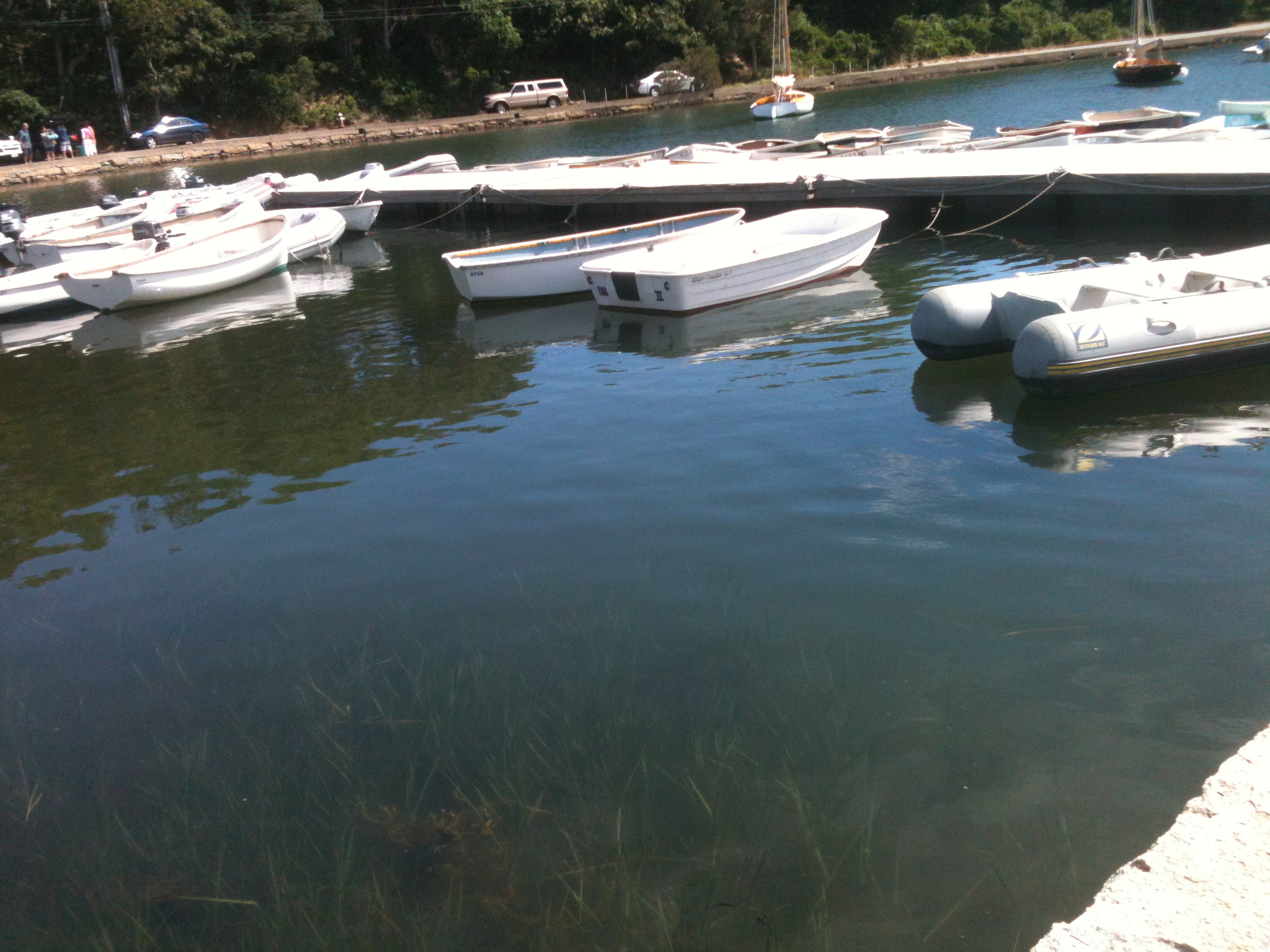
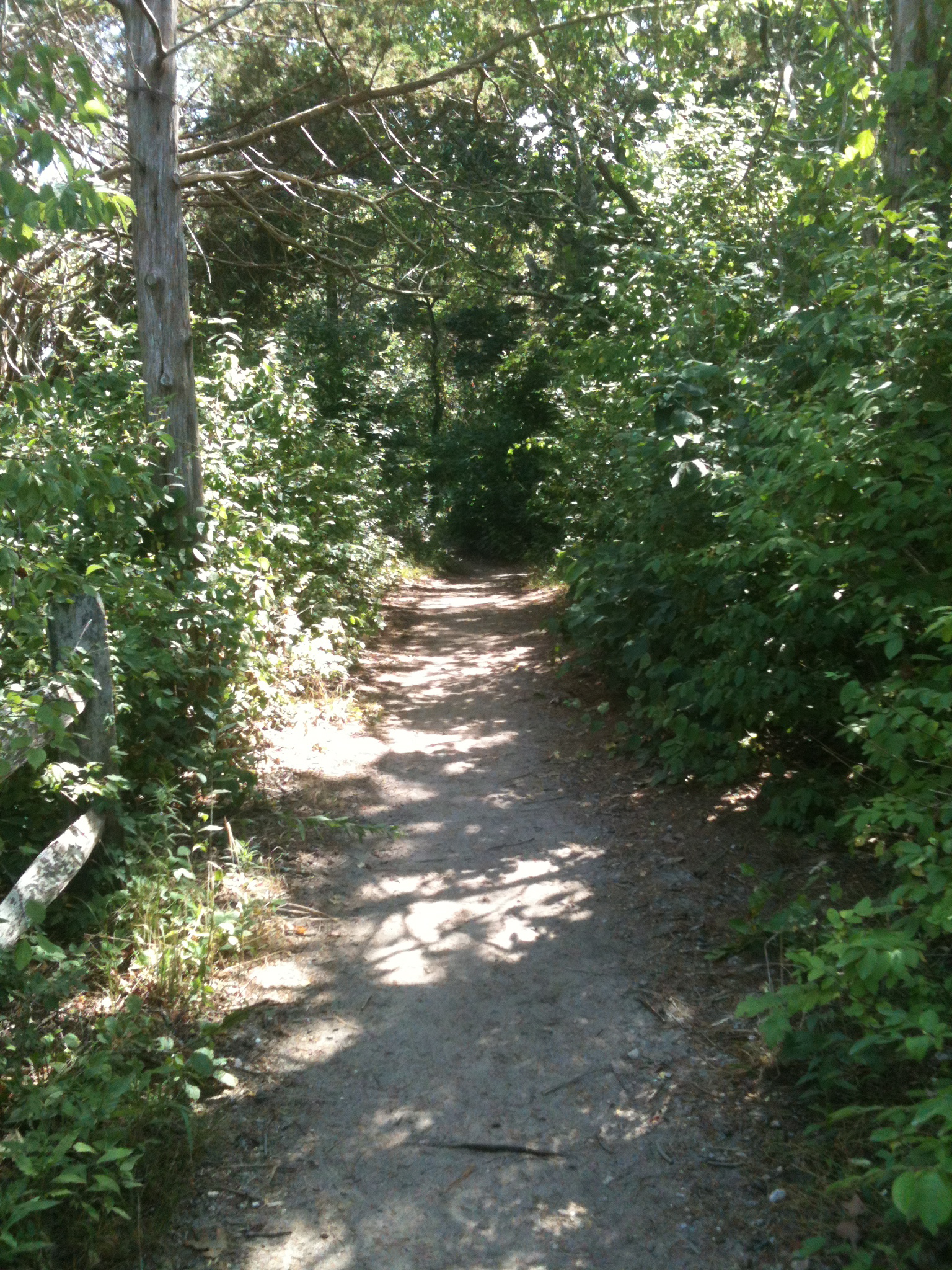
One spot close to us in many ways is The Knob, in Quisset. It’s a five minute drive to a half hour meandering walk through forest and seacoast paths.  It’s quiet and peaceful, yet adventurous and exhilarating.

My Imaginary Rabbit Hole

What I love best are the unexpected surprises that pop up every few minutes: a bird singing, a bunch of Queen Ann’s lace and beach plums swinging in the breeze, the huge, strong rocks with jagged as well as worn down edges that trim the water’s edge. Trees and vines grow like lattice work, making a covered walkway with blue sky peaking through. There’s always something to catch the eye and inspire.

No Rock Jumping, this time.

We’ve been taking this “walk by the woods by the sea” for more than 25 years. Today we remembered the tree swing that both girls loved so much—it has been taken down and Mother Nature has taken over with vines and tall grass—beautiful, but you can’t swing on them. David mentioned how he often carried Molly on his shoulders when she was small; she had the best view of all. I remember my Dad taking this walk, loving it, even when he no longer remembered where he was going. And once we packed a lunch and spent the day at the beach, noticing lots of unusual sea glass that was just waiting for us on this often unvisited beach.

The Knob

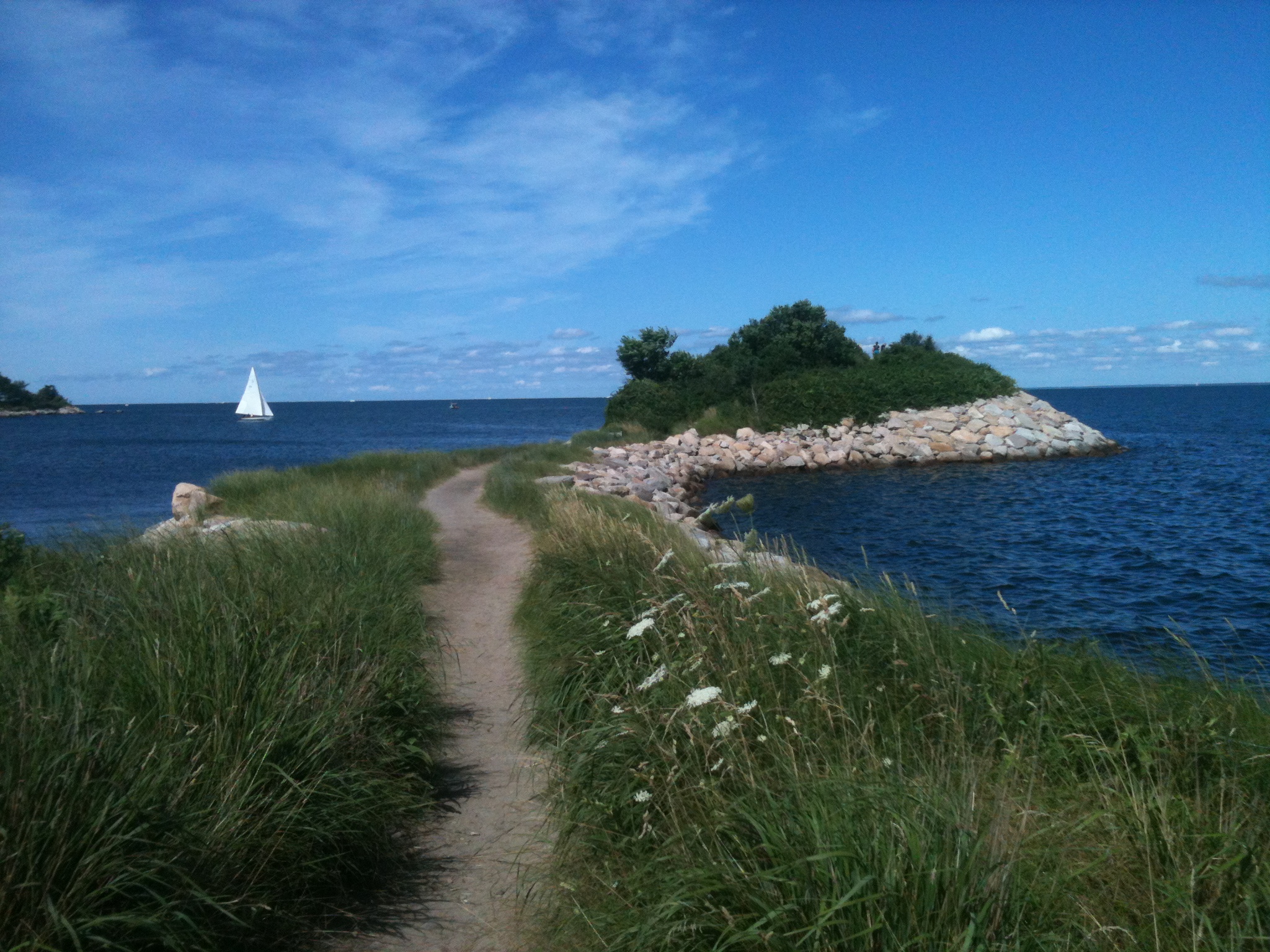
Treasures, lots of treasures, are here. The end of this deliciously long, windy path is  “The Knob”. It’s a rocky protrusion into the bay, covered with flat stones and provides a 360 degree view of beauty. Today Buzzard’s Bay is dotted with boats, and the sky has absolutely perfectly shaped white, puffy clouds. The sea breezes are always a tad stronger up there, and the bay is a bit bluer. At the edge I sense the power and strength of what nature has wrought. I feel iddy bitty and such a small part of a big whole—and it feels good.

Knob View

Today’s visit is part of David’s birthday weekend celebrations. The Knob is his kind of place and our kind of celebration.  We’ll be back soon with a picnic dinner and a good bottle of wine to watch the sunset.  It doesn’t get much better than that.

He who does not like to be photographed…

Happy Birthday, Schotzi!!!

Paging: Summer Reading

Posted on

My summer reading has been all over the place thus far. I guess that happens quite naturally when one is retired. I’m not complaining… it’s a delightful ride with lots of unexpected twists and turns. My rule is that I agree to read the first thirty pages of a book, and if it doesn’t make my heart go “pitter patter,” I drop it like a bad boyfriend. That’s a really good rule to live by! I’m not creating a class syllabus, I’m reading for pure, unadulterated pleasure.

My non-fiction reading is focused on the Paleo diet and research on limiting processed foods and complex carbohydrates. It’s only interesting because this food plan seems to work for me. The writing is not notable, but the content is. This batch includes The Blood Sugar Solution (Mark Hyman), Well Fed (Melissa Joulwan), and It Starts with Food (Hartwig) All encourage clean, lean protein, lots of non-starchy veggies, healthy fats and determination. The results are less craziness about food and a very stable blood sugar level. I’ve learned a lot from each of these texts and think I’ve done enough reading about this topic; now I need to rediscover my elliptical. If I could read on the elliptical, I bet I’d exercise more often…maybe it’s time for audio books on my iPod.

Also, in the non-fiction category, there is something completely different for me: a book about the early phases of the war in Iraq. My reading about war is usually focused on newspapers or fiction written about war, until the latest title on my list. My childhood friend, Andrew Lubin, wrote Charlie Battery: A Marine Artillery Unit in Iraq. This book makes me feel like I’m on the battlefield along with Andy’s son and his unit of young Marines. It has given me a newly found appreciation of the training, sacrifice and courage these young men muster in the midst of chaos and the unknown. They rely on their extraordinary training and their strong sense of community with their fellow Marines to endure whatever comes their way. I could not put the book down; it not only gives a bird’s eye view of the frontlines but also loved ones back home coping and trying to figure out what is really happening while watching the news. I also learned, again, how inaccurate and incomplete much of the media account about war is. This book shows the exemplary relationship between father and son—it’s based on love and respect and is so admirable. Go buy this book.

My book group has a tradition of reading classic children’s novels for our July and August meetings. This provided an opportunity to re-read two old favorites: The Wind in the Willows (Grahame) and The Secret Garden (Burnett). Yes, of course, I loved them both—although I am the only member who liked The Wind in the Willows. Those who unknowingly read the abridged version were most unhappy with what was omitted. I was absorbed in the delightful camaraderie as well as observing how important decisions are made within this crew of characters. When to stay and when to go are two crucial life issues dealt with quite nicely. Oh, how I wanted to find a kid to read it to or to just read it aloud and hear the words. I enjoyed The Wind in the Willows and am thinking of moles, water rats, badgers and frogs differently than before I picked up this text. All good stuff! Next month it’s on to The Secret Garden.

This brings me back to the children’s books that we read our daughters years ago. I recently stumbled upon several huge boxes of their favorite titles that were neatly packed away in the attic. When I mentioned the book stash to the girls, they made it clear that these books need to be moved to the cape house and saved forever, maybe longer. Of course, I sat down and read through several while I was supposed to be packing. I got lost in these fun kids books and my memories: Good Night Moon. A Fly Went By, Angelina Ballerina, Where the Wild Things Are, anything by Shel Silverstein or Jack Prelutsky, and Gregory The Terrible Eater. That’s just a few of the early books; the chapter books will have to wait for another day or the packing will never get done.

Top on my list of self-selected reading is an advanced copy of In Sunlight and In Shadow by Mark Helprin. The book will be published this October, and I really appreciate getting a galley copy. Helprin’s writing mesmerizes me and keeps me in his world for years. I first read Winter’s Tale years ago and still think about his main character, Peter Lake, and wonder what he’s doing now that the book is finished. Oh, wait, he’s a fictional character. Helprin’s characters live forever in my head, and I love it. I’m about 100 pages into this book and am already fretting that the end will come too soon… but the message is clear…this is another winner and you should read it.

My other choices in fiction are patiently waiting on the shelf for me. They include Tree of Codes (Foer), Great House (Krauss), and Swamplandia (Russell) Since we got rid of the television, there’s even more time for reading and thinking. Wish we did it sooner.

Several books about the state of college education are in my pile as well. At one point, I thought I’d write my own book about teaching college to this generation of students and what specific demands and issues are in play. Who knows if I’ll write the book, but I’m looking forward to seeing what other authors have to say and how they say it. These titles are Academically Adrift (Arum/Reksa), We’re Losing Our Minds: Rethinking American Higher Education (Keeling/Hersh) and Higher Education? (Hacker/Dreifus).

No, I won’t be reading Shades of Grey, not because I’m Puritanical, but because time is short and there are so many well written, creative, enlightening books waiting for me.

What are you reading now? Leave a comment!

Walk This Way

Posted on

A visit to Cape Cod Lavender Farm is an awfully good way to start celebrating our 40th wedding anniversary and the beginning of life full time on the Cape. The farm is owned by a couple who work it every day. They have more than 10,000 fragrant, lovely lavender plants on twelve acres of peace and quiet.

Up close the purple spikes look dainty, yet strong. They sway in the breeze, and the fragrance is gentle and subtle.

The rows are bushy and reveal the different varieties–a spectrum of color and leaf structure. It all smells so good.

We had an opportunity to talk to the owners, Cynthia and Matthew Sutphin, and it was clear that this farm is a labor of love. Every day there is toil and joy. There are money problems, weather issues, and Mother Nature delivering her best and her worst.

There is a simple and honest theme at this place. Nothing is gussied up; there are no artificial additives to the view or the product. It’s remarkable refreshing.

The Queen’s Ann Lace borders a small garden. Its delicate form reminds me of a lace shawl I’m working on. Art does imitates nature.

Even the weeds look pretty in their own way. I’m sure there are lots of lessons here that correlate to being married for forty years, but right now I’m going to have a bowl of yummy strawberries and raspberries with my groom..