RSS Feed

Category Archives: review

12 Days into 2013

Two and a half books are read so far this year and they’re all quite different. The best, by far is Julie Morgenstern’s SHED Your Stuff, Change Your Life. It’s focus is not only on decluttering and simplifying, but adding some exploration about why the bad habits begin in the first place and are so difficult to kick. Unlike most books of this type, it does more than demand that you throw things out. I found it useful, and it’s in line with my goal of working toward creative simplicity. I also had the good sense to borrow it from the library and return it on time. No clutter on the bookshelves.

Deadbeat, not heartbeat

Deadbeat, not heartbeat

The book selection for my book group this month was The Art of Hearing Heartbeats by Jan-Philipp Sendker. It’s not often that I really don’t like a book– and this is one of those times. Honestly, if I didn’t need to read it for my group, I would have dropped it after page twenty. Disappointing…melodramatic… didn’t strike a chord, not even a note with me. It was not believable and didn’t make me care enough to embrace what was suppose to be magical. I didn’t care about the characters; they weren’t authentic. The maudlin theme of “love conquers all” was a bore. The plot was dependent upon actions that I just didn’t buy into. Get the point… I didn’t like it and don’t recommend it.

On the other hand, I’m totally engaged in Isaac Bashevis Singer’s Satan in Goray. Each sentence pulls me further into his world. It’s so well written; I often stop and re-read sentences because they are so striking. This book was a gift from one of my most outstanding students, Miki, and he was absolutely right… I love this book and can’t wait to read the next one he gave me.
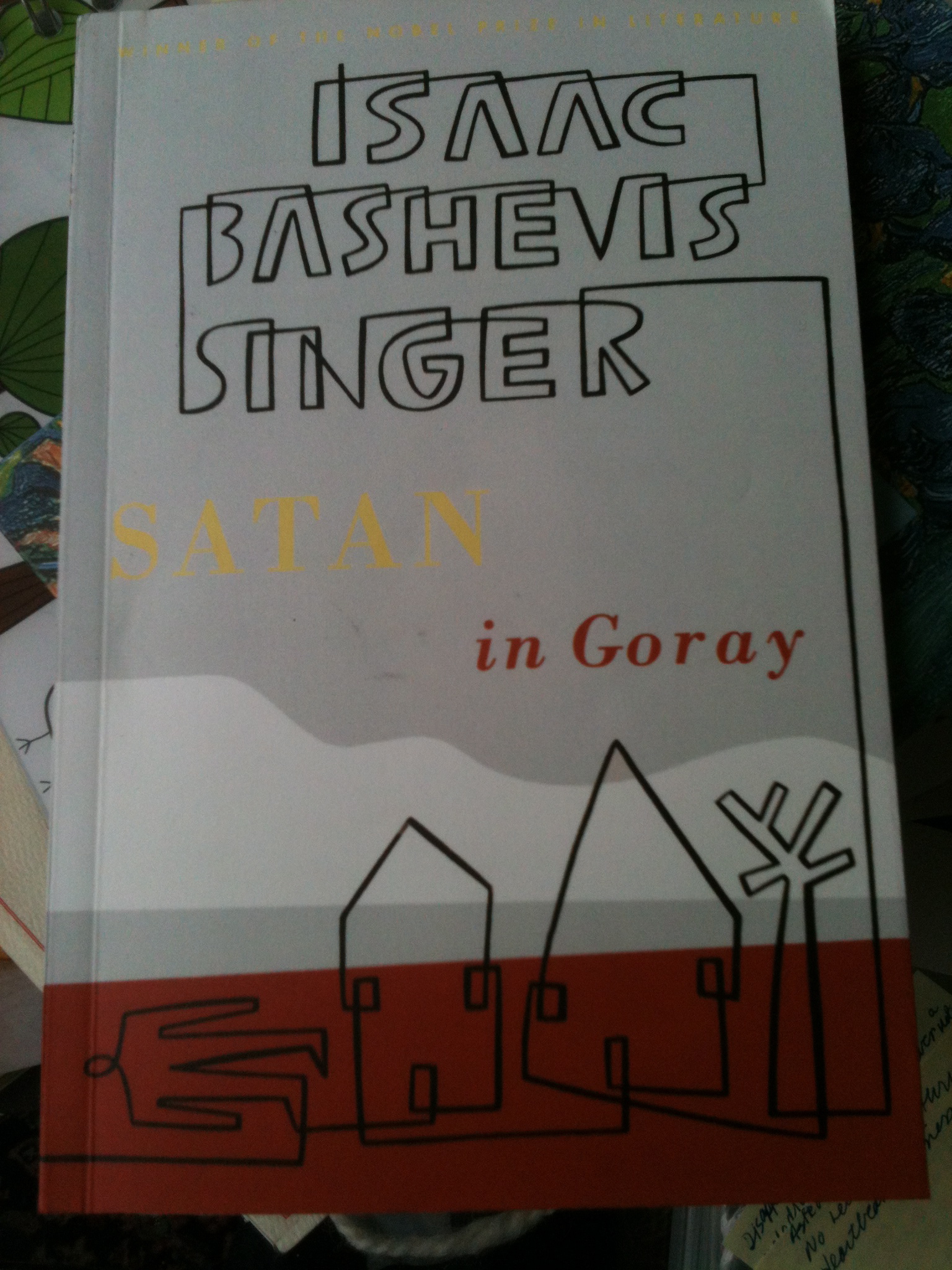
Satan in Goray

Satan in Goray

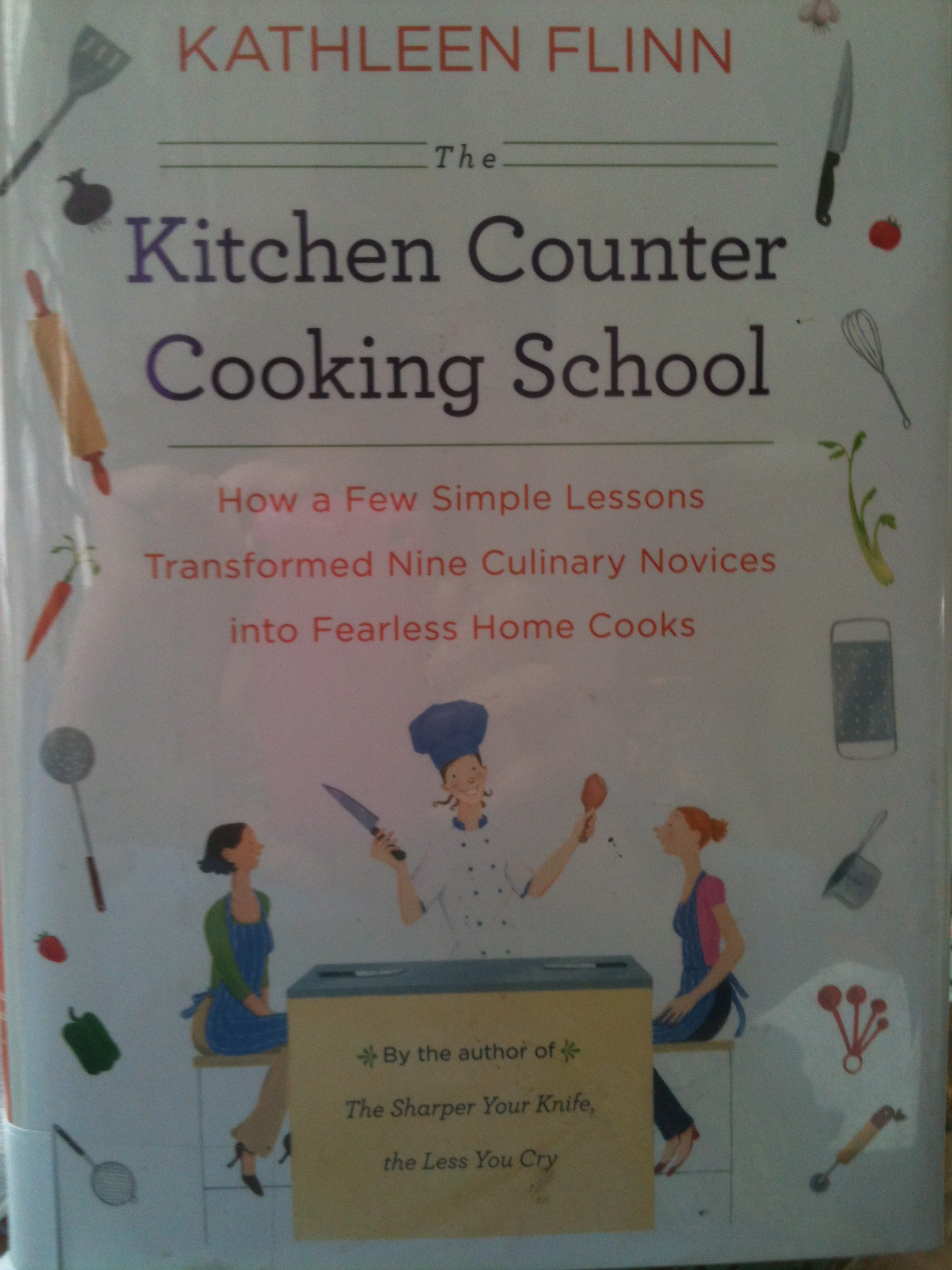
Last on my review list is book connected to the What’s Falmouth Reading? initiative. The focus is on local grown and make your own food. The Kitchen Counter Cooking School is a memoir/cookbook written by Kathleen Flinn. Her modus operandi is to find folks in the grocery store with carts full of processed, unhealthy food and to teach them some basic culinary skills that change the way they eat. It’s not an astounding concept– Emeril Lagasse used to do something similar on his TV show. The information is not earth shaking, but I do find it interesting how she engages each of her students and how she teaches them new skills. It’s a good book to skim and glaze over. The primary book for this town wide project is Barbara Kingsolver’s Animal, Vegetable, Miracle. That’s on my list for next month.
IMG_1320

My game plan for the month of January is to read at least a book a week. I’m enjoying the pace and the extended time with my nose in a book. I just got an advanced copy of Elizabeth Strout’s new book, The Burgess Boys, and after teaching Olive Kitteridge, I’m really curious to read her latest work. And then there’s my beloved Mark Helprin’s In Sunlight and In Shadow. I’m reading it in “teaspoon fulls” because I don’t want it to end. Love it, love it, love it.
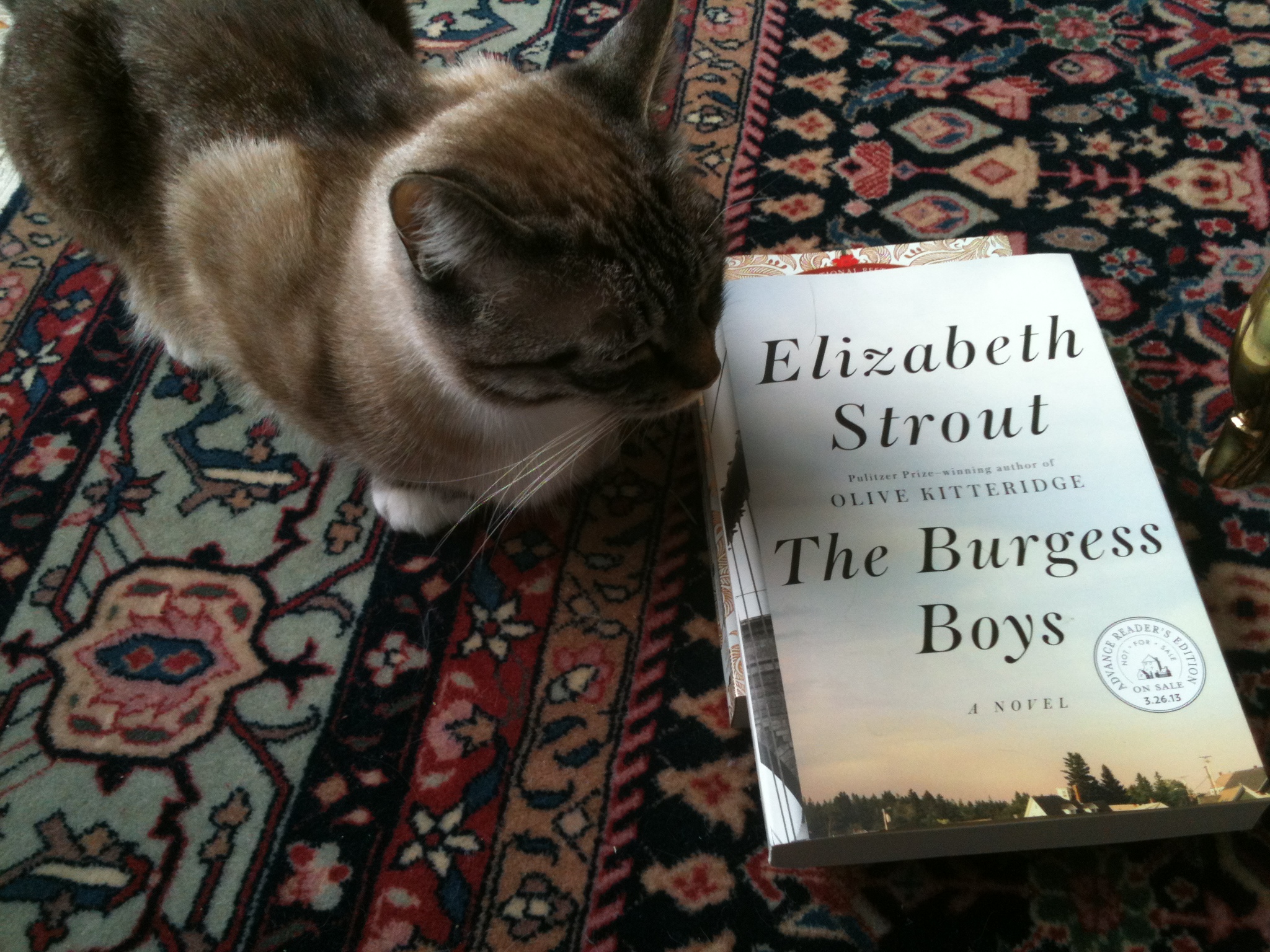
Bella and The Burgess Boys

Bella and The Burgess Boys

One of the side effects of my increase in book time is that I’m spending less time doing stupid things on line… like checking my e-mail a zillion times or revisiting my bookmarked sites every ten minutes. Gotta go…. time to check out the Winter Farmer’s Market at Mahoney’s.


Less is More is True

  1. Our low-key, sensible, non-traditional Thanksgiving was a big win. The food was healthy and moderate. There was more quiet, downtime and less craziness for everyone. I put together several polar fleece scarves, teddy bears and blankets for our local food/clothing pantry. Most of all, I appreciated the tenor of this holiday and will use it as a bridge to the rest of the holiday season. Less is more is true.

    IMG_0367

    Kettle Pond at Beebe Woods-Click on pix to enlarge

  2. Christmas is a few weeks away and most of my gifts will be made by hand this year. I’m psyched. There are socks, hats, mittens, shawls, cloth dinner napkins, lavender sachets and a blanket waiting to be wrapped in paper I already have stashed from years past.
  3. “Buying Only The Essentials” has been in effect for five weeks (who’s counting?!) I’ve been trying to buy only the items that I really need: no excess, no fluff, no crazy consumption. Yes, I have fallen off the wagon once or twice, but nothing major. Black Friday and Cyber Monday found me enjoying what I already have and completely avoiding the chaos of those days. Each day that I successfully stick with the basics makes it easier to make this a way of life. I could have bought more books, yarn, fiber, food, Christmas gifts, but it was freeing to know that I really didn’t need all of the above. This voluntary simplicity is adding much more than it is subtracting.

    IMG_0873

    Stone Wall Originally Meant to Stop Sheep From Wandering

  4. Speaking of way of life…David and I have been taking our brisk 45 minute daily walks for a little over a month. We vary the route so that we’re always checking out a new part of town. Re-discovering Beebe Woods with its kettle ponds, huge rocks and meandering paths has been a delight. I do forget that I’m exercising. The walk is brisk enough to qualify as a workout, but paced to be able to soak up all the joy along the way. As it gets colder, the mittens, boots and hats will join the action, and I’m expecting that we can do this all winter. I no longer try to avoid it or bitch about it afterwards. I think that’s progress!

    IMG_0850

    Almost Bigger Than Life

  5. Books, books, books! My “to read” list continues to grow. I just started The Show Child by Eowyn Ivey and am instantly pulled into the text. The language is mesmerizing and after only twenty-five pages, I care about the characters and want to see how their lives unfold. For some reason it is reminding me of Winter’s Tale by Mark Helprin—one of my favorite books. Speaking of Helprin, I’m reading his new book In Sunlight and in Shadow a bit at a time in order to make it last longer. I don’t want it to end. And next on my list are two Isaac Bashevis Singer books from my beloved student, Miki. I can’t wait to read them and talk to him about them.
  6. Every day something happens that makes me appreciate living here in Falmouth full time. There truly is a sense of community that is in sync with who I am and what I value. I’ve made new friends that will last a lifetime, maybe longer.

    Beebe Woods

    Beebe Woods

Love Lost: Junot Diaz

In This is How You Lose Her Junot Diaz willingly shares a seat on his sofa, a view into the bedroom, and the tensions that accompany love lost. He puts us completely into his world, and the complimentary whiplash is upsetting and addictive at the same time.

This novel continues with Yunior’s life as well as several episodes of familial as well as romantic love stories gone bad. Diaz explores the small actions that merge to create messy relationships and “life messes” in general. This novel serves up a rich narrative of how characters ruin their lives.

The book reads like someone is telling a story, the way a relative would share family secrets. Like voyeurs, we see it, hear it, almost taste the story. Characters come alive; their stories strike chords. As they make the same mistake repeatedly, we see it, they don’t. In many ways, it’s like watching a car wreck, but not rubbernecking for the blood and gore. The characters keep on moving, and so do the readers. I couldn’t put the book down and read it in one sitting.

Dysfunctional family dynamics bombard the reader. Sibling rivalry, preferential parental treatment, father’s absence and/or abuse, and living in far from perfect conditions are themes in each chapter. Love is lost and people suffer. Every chapter highlights struggle, disappointment and loneliness. There seems to be no answers or solace readily available. We turn each page and wonder if Yunior’s fear of Armageddon will be realized in the next chapter.

All of this angst occurs while the characters are always outsiders—alienated from the world around them. The cultural differences between life in the U.S. and the Dominican Republican are magnified and personalized. They’re also never mitigated. It’s more tension that never leaves these pages.

Diaz’s language is a mixture of words we understand, and many others that are mysteries. Some words are Spanish, some from contemporary media works, others seem created out of thin air. These mysterious words require looking at the context and using one’s imagination. It all works quite well. It’s also the written language (journal, e-mails, letters) within this novel that divulge secrets, expose truths and create chaos. Diaz does honor the written word and pay it homage. His unmistakable voice resonates clearly and effectively.

This book is not about searching for excellence or success… it’s a hunt for temporary happiness and coping skills to survive from day to day. Diaz has his players use sex as an instant fix for boredom or loneliness, but it often falls short in more ways than one.

Diaz paints this sad picture, but it doesn’t read as “desperate or hopeless”— it just goes on. The hook-up culture dominates and sex without intimacy rules. That’s how it rolls. The constant designation of women according to their nationality followed closely by a description of their bust and derriere is tedious; I expect Diaz does this purposely. It’s tiresome and limiting to view women in such a narrow perspective.

Infidelity and betrayal are the norm in this book, and both have consequences. Diaz does not harp on the morality of cheating on a lover, no matter how indiscriminate and how pervasive. He reveals that the cost of being a philanderer is anxiety, disappointment and alienation for all parties involved. It isn’t pretty, and it is painful. He shows how the women and children cope with their absent male figure and inadequate relationships. The men are shallow and often cruel. Few characters actually trust each other; there is a lack of authentic, respectful, loving partnerships here as well. Emptiness, self-destruction and self-loathing abound. Diaz shows that this behavior consistently depletes his characters. We see them shrink in their own eyes and in the eyes of the rest of the world.

The last chapter shows some enlightenment and a modest, new beginning. I had hoped for more from this book. I did become weary of women often used only as semen vessels with interesting protrusions front and back. And likewise it was boring to have male characters who are either busy humping or thinking about humping. Maybe that’s how they feel powerful in a world that doesn’t give them much clout. Is that the message? Is the purpose of Diaz’s effective storytelling a search for love, trust, respect? Maybe it just shows the depth of emptiness and a flailing attempt to fill a painful void.