RSS Feed

Category Archives: read

Know That Kid ASAP

As a teacher, when the college semester is limited to 25 classes or the middle/high school marking period is ten to twelve weeks, I found it crucial to learn as much as I could about each student as early as possible. Here are some strategies that I used for all ages.

  1. Name That Face Before classes begin, review class lists, get student photos to be able to match the face with the name. Have index cards and markers so each student makes a name card to place on his/her desk; that facilitates you learning names and the students learning each other’s as well.
  2. Intro Letter and Task Also before classes begin, send a short, pleasant letter/e-mail to each student introducing yourself, reviewing the agenda for the first couple of days and asking them to collect a small number of items for a local homeless shelter (3 toothbrushes or 3 bars of soap or 3 pairs of athletic socks). Tell them to be prepared to discuss how they managed to get these items. This task serves as an icebreaker and gives insight about each student solved the problem of procuring the goods.
  3. The Questionnaire During the first class, I hand out a questionnaire that is somewhat lengthy. It’s due at the beginning of the next class. I ask what they liked best and least about English class. Also, what do they think is important for me to know about them in order to better teach them? What books have they read recently? What do they think makes a person a “good reader”? What do they think makes a student a “good writer”? I ask them to tell a little about the best paper they ever wrote. What is unique about their style of learning that would be helpful for me to know? What do they want to be doing in four years? What makes them happy? What scares them? They are told to write in complete sentences and answer each question fully.

And lastly, most importantly, what questions do they have for me… and I leave a large space for them to write as many questions as they want. I promise to answer their questions promptly. I pour over the surveys once they’re submitted and make notes in my grade book regarding anything I can glean from the student’s responses that will help me teach them. For example, next to StudentX’s name I might write: says hates English, has ideas but can’t write, likes to read books she chooses herself, not assigned ones, many mechanical errors. My work is clearly laid out for me.

Knowing that information on Day Two is an incredible asset. I make time to meet with each student and address the issues that jump out at me. It’s an open discussion and a friendly, professional way to start the semester. It diffuses problems before they begin. Students are often surprised that a teacher would care to ask these questions and begin to see that this learning process is a two-way street requiring effective teamwork between teacher and student.

  1. Define Your Recipe for Success: I clearly list what I believe is necessary to succeed in my class in the class syllabus. Here is a sample of the ingredients:

-Show up on time and fully prepared to work and think hard.

-Mistakes are not signs of weakness. They’re data to use and an opportunity for learning. Don’t be afraid of them.

-Good students ask for help and for lots of feedback on their work.

-If you try hard, learn from your errors, and persist, you can succeed.

-Consistent effort and effective strategies are the main determinants of success.

-Writing is rewriting.

-Reading for pleasure results in improvement of many skills: vocabulary, comprehension, synthesis. Get addicted to reading.

-Ask questions—of yourself, or your textbook, or others.

-Push beyond the obvious.

-Be invested in your own education.

This “recipe” eliminates ambiguity about my priorities. I want them to be fully engaged and fearless. I make that clear.

5. Office Hours and Scheduled Appointments: During the first two weeks of classes, I make it a point to meet individually with each and every student. It gives us an opportunity to review what is expected and to address any questions or worries. We also map out a game plan of what specific goals the student has for this class and what particular skills need special attention. It’s a way to catch and eliminate problems of the past and move forward as a successful student. Yes, this is time consuming, but it is well worth it; it thwarts problems that most likely would have surfaced later in the semester when there might not be time to handle them.

What I like about this whole “ramping up” process is that it significantly shortens the time we need to get acquainted and hastens the time we get to start working on class work. It also makes the teacher aware of information that either wouldn’t be known or would take valuable weeks to discover.

And I do love the questions they ask me…some of my favorites:

Why do you teach?

Do you always have so much energy?

What is your favorite book, TV show, movie, ice cream?

Are you really going to answer my questions? Really?

P.S. If you have already started classes, it’s never too late to put any of these practices into action.
Classroom Rules For All Ages

Posted on

As a teacher I worked with students of all ages from elementary school, through middle and high school and finally at the university level. Without fail, on the first day of class I’d layout and discuss rules that would guide the semester.

Yes, there would be a listing of books to be read, topics to be covered, forms of writing to be explored, and problem solving techniques. Most importantly, however, was the attitude and process that would be in play.

As a child, I hated the “If you don’t know what you did wrong, I’m not going to tell you” approach—it was deadly. I’m a great fan of setting clearly defined expectations at the beginning. Although the wording might have changed over the years as I moved from teaching ten year-olds to twenty somethings, the messages were consistent.

Here’s the list of “rules” I have collected from various sources over almost forty years. I reviewed one by one on the first day of class… and kept the list posted in a highly visible spot all year long:

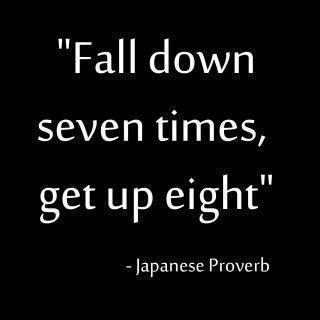
  1. Mistakes help us learn.
  2. You’re not supposed to understand everything the first time around. Critical thinking, pushing beyond the obvious, and perseverance are what count.
  3. Good students ask for help and for lots of feedback on their work.
  4. Consistent effort and effective strategies are the main determinants of success.
  5. Everyone is capable of high achievement, not just the fastest ones.
  6. If you try hard, learn from your errors, and persist, you can succeed.
  7. Mistakes are not signs of weakness. They’re data to use. They’re an opportunity for learning. Don’t be afraid of them.

I’m noticing that these are “rules” that I seem to use everyday, no matter what the venue. Whether it’s reading a challenging book like Jonathan Safran Foer’s new, unusual Tree of Codes or attempting a complicated sweater design or a sudoku puzzle, the rules help me push beyond chaos and get to something meaningful. Getting rid of the fear of failure and using our own learning experiences as a tool is one of the best lessons we can learn.

Bored…Clean the Toilet!

Posted on

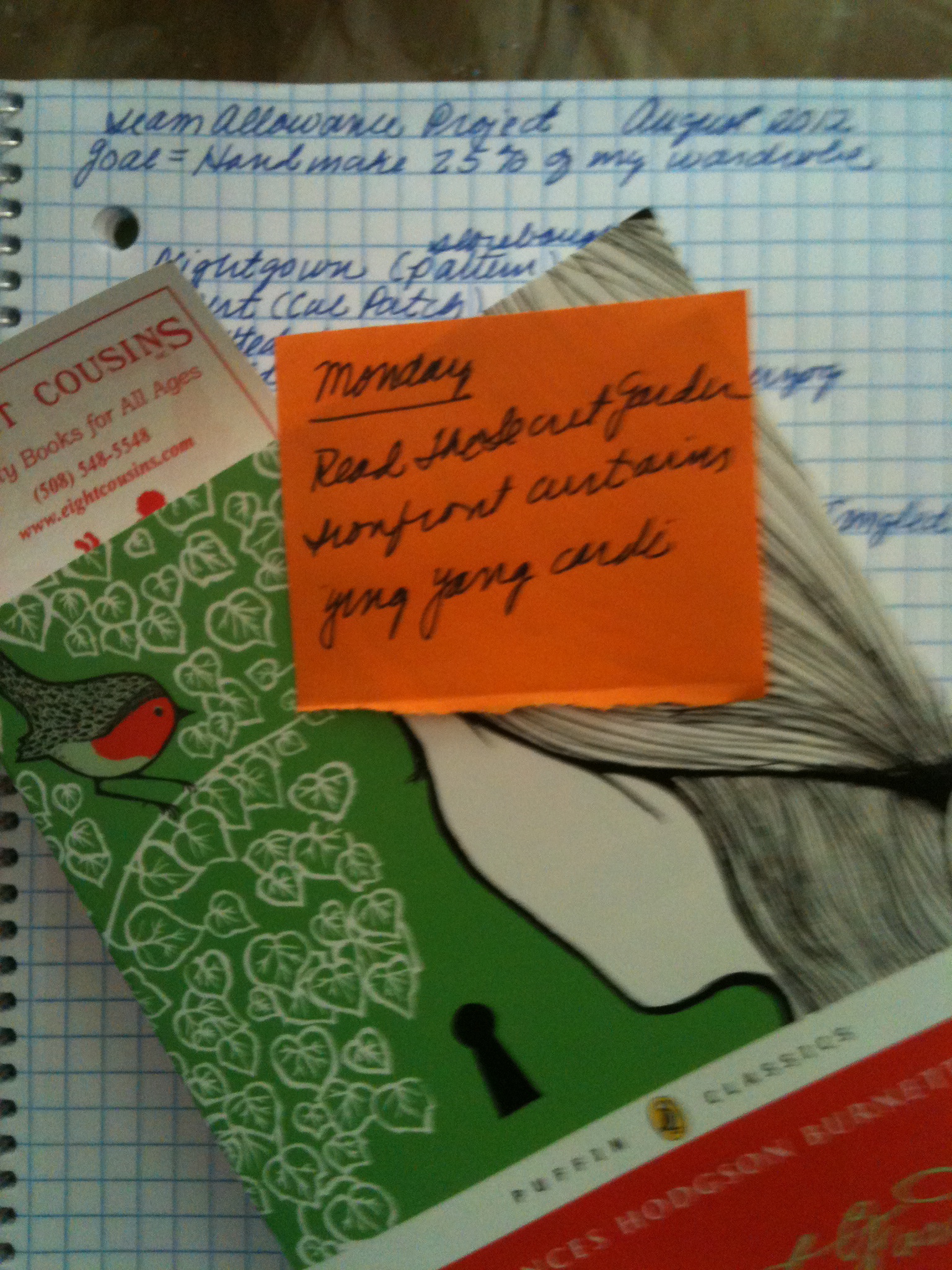
Monday’s Short List

Being bored was not permitted in my childhood household. Any version of or indication that the words “I’m bored” were to be voiced were met with an immediate command to grab a rag and wipe the baseboards or, worse yet, clean the bathrooms. So, I learned not to voice it and never to think it.

My days were always jam packed with things to do; some were required tasks dictated by firm looks, but most were fun adventures in my head just waiting to happen. I loved getting up early and riding my bike around the neighborhood, feeding Papa Louie’s chickens, reading a book under the big trees in the front lawn, climbing up into my tree house and looking straight up at the sky through the sassafras leaves…there was never a dull moment. None of these events are earthshaking or monumental, just little moments that collect to make a fine, non-boring day. I also learned the value of solitude. I gave myself time to myself. That was a lesson worth learning.

As I got older, my stack of books on my nightstand got taller. The local bookstore and library became favorite haunts.  I chose a bookstore as a client and teaching as a career so I could get even closer to the good stuff. A similar pattern erupted with fabric and yarn and cookware. There’s always something that wants to mix and hatch—and I’m quite excited about it all. Mind you, it’s not non-stop busyness—there’s ample quiet, downtime to recharge my creative batteries, daydream, and sleep!

Having an overflowing list of possibilities is how I function. Yes, I have to work to limit the overwhelm and chaos, but it’s worth it. I make lists, but have learned to keep them short. Three items on a small scrap of paper guide my daily adventures and give some modicum of focus. There’s no real obligation to complete the list or even to look at it… it’s just a suggestion. I do much better with suggestions rather than ultimatums. At age sixty, I enjoy “being in the moment” more than ever and let that govern my schedule.

When I go to a restaurant or any kind of food purveyor, I often ask… “What should I not leave today without trying.”  That opens new doors and lots of windows every time. Spotify gives me the chance to play “what’s new” and try to figure out if I want to hum the lyrics. Pinterest provides fresh visual images and interesting ideas from around the world. When I was in the classroom, every day was a new adventure with lots to think about during and afterwards. I appreciate the “rush” of pushing the boundaries of my comfort zone. Maybe that’s why I’m never bored… who knows.

This time of the year marks new beginnings for me. It’s probably because I always connect the end of summer with the beginning of the school year. It’s an opportunity to look at time spent, and look forward to how I want to spend it in the future. Assess, reevaluate, re-think, create anew. Now that I’m retired, this ritual is more rich and exciting. What do I want to accomplish this Fall? The challenge is to keep the list short and never boring:

1.    Design and create 25% of my wardrobe by hand.

2.   Exercise every day (oh bullshit… maybe every other day)

3.   Read a book a week. Yes!

4.   Play in the garden.

5.    Waste less time on the internet.

That’s it. I’d love to hear how you broach Fall and any issues with boredom. Please feel free to leave a comment.

Half Way to 120 Years Old

Posted on

This week I turn 60 years old—I like to think of it as half way to 120. I’ve never been the type to fret about birthdays or aging. There’s so much I’ve got left to do as long as I’m here. That’s why I like to think about it as half way to 120.

First on my list is to continue to take good care of myself. Self-care has never been my forte. This past year it has been a priority, and I’m getting better at eating healthy, exercising and de-stressing. Being at the Cape has been a help; the world moves slower here, and I take time to do things that are good for me. There will be time to enjoy my hubby and the kids. The girls are all grown up, and they’re so much fun to be with. I’m a lucky lady.

The community here is a wonderful mixture of artists, intellectually curious minds, and generally sincere, good folks. My book group, knitting circle and to-be-formed spinning group bring out the best in me. So does a visit to the Farmer’s Market and the Falmouth Library. Having dinner at the Quarterdeck with Whitney as our all time, fabulous waitress is a regular date.

There are books to be read, writing to be done, creative projects to hatch, and gardening to tend. I promise not to get old and grumpy. There will be no complaining about the weather or saggy skin or a big ass. I will not dye my hair shoe-polish brown or wear orange lipstick. There will also be no bitching about stuff on television. I won’t be undergoing any plastic surgery or liposuction, but I will be eating more veggies. I will spend less time on the internet and more time daydreaming.

I’ll design and create most of my own clothes—and actually wear them. There will be fewer pieces in my closet, but they will be good looking and well-loved. There will be shelves with empty space on them and cupboards with room to spare. I’ll have less stuff, more time, less agita, more creativity and no headaches. There will be fewer rules and more coloring outside of the lines. That’s what turning half way to 120 will be for me. Oh, yes, there will be cake!

Paging: Summer Reading

Posted on

My summer reading has been all over the place thus far. I guess that happens quite naturally when one is retired. I’m not complaining… it’s a delightful ride with lots of unexpected twists and turns. My rule is that I agree to read the first thirty pages of a book, and if it doesn’t make my heart go “pitter patter,” I drop it like a bad boyfriend. That’s a really good rule to live by! I’m not creating a class syllabus, I’m reading for pure, unadulterated pleasure.

My non-fiction reading is focused on the Paleo diet and research on limiting processed foods and complex carbohydrates. It’s only interesting because this food plan seems to work for me. The writing is not notable, but the content is. This batch includes The Blood Sugar Solution (Mark Hyman), Well Fed (Melissa Joulwan), and It Starts with Food (Hartwig) All encourage clean, lean protein, lots of non-starchy veggies, healthy fats and determination. The results are less craziness about food and a very stable blood sugar level. I’ve learned a lot from each of these texts and think I’ve done enough reading about this topic; now I need to rediscover my elliptical. If I could read on the elliptical, I bet I’d exercise more often…maybe it’s time for audio books on my iPod.

Also, in the non-fiction category, there is something completely different for me: a book about the early phases of the war in Iraq. My reading about war is usually focused on newspapers or fiction written about war, until the latest title on my list. My childhood friend, Andrew Lubin, wrote Charlie Battery: A Marine Artillery Unit in Iraq. This book makes me feel like I’m on the battlefield along with Andy’s son and his unit of young Marines. It has given me a newly found appreciation of the training, sacrifice and courage these young men muster in the midst of chaos and the unknown. They rely on their extraordinary training and their strong sense of community with their fellow Marines to endure whatever comes their way. I could not put the book down; it not only gives a bird’s eye view of the frontlines but also loved ones back home coping and trying to figure out what is really happening while watching the news. I also learned, again, how inaccurate and incomplete much of the media account about war is. This book shows the exemplary relationship between father and son—it’s based on love and respect and is so admirable. Go buy this book.

My book group has a tradition of reading classic children’s novels for our July and August meetings. This provided an opportunity to re-read two old favorites: The Wind in the Willows (Grahame) and The Secret Garden (Burnett). Yes, of course, I loved them both—although I am the only member who liked The Wind in the Willows. Those who unknowingly read the abridged version were most unhappy with what was omitted. I was absorbed in the delightful camaraderie as well as observing how important decisions are made within this crew of characters. When to stay and when to go are two crucial life issues dealt with quite nicely. Oh, how I wanted to find a kid to read it to or to just read it aloud and hear the words. I enjoyed The Wind in the Willows and am thinking of moles, water rats, badgers and frogs differently than before I picked up this text. All good stuff! Next month it’s on to The Secret Garden.

This brings me back to the children’s books that we read our daughters years ago. I recently stumbled upon several huge boxes of their favorite titles that were neatly packed away in the attic. When I mentioned the book stash to the girls, they made it clear that these books need to be moved to the cape house and saved forever, maybe longer. Of course, I sat down and read through several while I was supposed to be packing. I got lost in these fun kids books and my memories: Good Night Moon. A Fly Went By, Angelina Ballerina, Where the Wild Things Are, anything by Shel Silverstein or Jack Prelutsky, and Gregory The Terrible Eater. That’s just a few of the early books; the chapter books will have to wait for another day or the packing will never get done.

Top on my list of self-selected reading is an advanced copy of In Sunlight and In Shadow by Mark Helprin. The book will be published this October, and I really appreciate getting a galley copy. Helprin’s writing mesmerizes me and keeps me in his world for years. I first read Winter’s Tale years ago and still think about his main character, Peter Lake, and wonder what he’s doing now that the book is finished. Oh, wait, he’s a fictional character. Helprin’s characters live forever in my head, and I love it. I’m about 100 pages into this book and am already fretting that the end will come too soon… but the message is clear…this is another winner and you should read it.

My other choices in fiction are patiently waiting on the shelf for me. They include Tree of Codes (Foer), Great House (Krauss), and Swamplandia (Russell) Since we got rid of the television, there’s even more time for reading and thinking. Wish we did it sooner.

Several books about the state of college education are in my pile as well. At one point, I thought I’d write my own book about teaching college to this generation of students and what specific demands and issues are in play. Who knows if I’ll write the book, but I’m looking forward to seeing what other authors have to say and how they say it. These titles are Academically Adrift (Arum/Reksa), We’re Losing Our Minds: Rethinking American Higher Education (Keeling/Hersh) and Higher Education? (Hacker/Dreifus).

No, I won’t be reading Shades of Grey, not because I’m Puritanical, but because time is short and there are so many well written, creative, enlightening books waiting for me.

What are you reading now? Leave a comment!

DeLillo Messes With My Head

Posted on

Don DeLillo’s book, White Noise, has been on the bottom bookshelf, collecting dust bunnies for ages. I’d pick it up, dust it off, and put it down. DeLillo re-entered my life as this past month’s book group selection: Falling Man. It’s a book that focuses on a family that is significantly dysfunctional before September 11 in NYC and massively sad and broken post 9/11. It was not a fun read and several times I thought about putting it back on the shelf with the dust bunnies.

Falling Man hit three of my emotionally fragile hot spots: 9/11, Alzheimer’s, and suicide. One of these would have been almost more than I could have handled, but all three of them really pushed buttons.  The primary characters were separated and emotionally disconnected before the planes hit the World Trade Towers. Afterwards, they spent time together, but it was painful as a reader to see them be so inadequate, loveless, and alienated to themselves, each other and their son, who is called “the kid” most of the novel. Empty and hurting and it doesn’t stop—that’s the pace of the novel.

The wife’s compassion is revealed only with her work at a local Alzheimer’s day care center, but it is likewise measured and hopeless. It is her effort to stave off the inevitable loss. The patients lose their memories, their love of life and gradually slip away. In contrast to this slow death, we see the shock of the traumatizing 9/11 deaths and her father’s suicide when he discovers he has Alzheimer’s and doesn’t want to live long enough to forget who his daughter is. It’s an alternative plan that seems selfish and selfless at the same time. His disease is, likewise, a random event… and he chooses to jump.

Amidst all of this gloom and doom is a performance artist, called “Falling Man” who dresses in street clothes and then rigs himself so that it looks like he is falling out of a window or off of a bridge. It’s a creepy reminder of tower victims who jumped from windows to their death in order to escape a fiery death. He performs by taunting death and raising fears—but does so for entertainment and art—much like DeLillio. Ironically, this is one character that I want to know more about. What makes him tick? Who is he? What’s his story? All we learn is that he dies young, and it is because of natural causes. He does toy with chaos and randomness instead of succumbing to it. It’s a scary game.

There is no relief from grief, guilt, lovelessness, and alienation in this book. The husband ends up playing poker professionally, sometimes cheats, and is living a shell of a life. He’s fighting randomness on the poker table. Everyone else is broken and doesn’t heal, and the droning beat goes on.

Why write this story? What’s the purpose? It can’t be just to make me sad. Perhaps this is the miserable underbelly of living through struggles. It shows what it’s like to survive short term and long term disappointments and failures. “Survive” is the canonical verb, not thrive. These are the folks that find a way to put one foot in front of the other when their lives suck. They survive their despondency and cope the best they can. Each does so by entering into one’s own cocoon, where the character has the opportunity to control what little can be controlled. It’s not optimal, but it’s safe, and they found a way to go on.

BookGroupitis

Posted on

After I retired from college teaching, I needed a book group. I mean, really needed a book group—like most people need oxygen. As a professor, I was so accustomed to reading all types of texts and having a mostly attentive group of students to discuss our observations and opinions. I also had some key faculty members who would huddle in the hallway and share book goodies.

For the last year I’ve been reading a lot on my own and have been at a loss seeking a small group of like-minded bookworms. I found several groups in public libraries, bookstores and on line. I don’t usually think of myself as a high maintenance literary diva, but I am awfully hard to please in this department. Either the books didn’t interest me, the atmosphere was tense or loosey goosey, or nobody actually read the book. So I muddled on my own and tried to get satisfaction with online book groups; that wore thin quite soon. I missed the face to face contact and the ability to discuss a book in depth instead of several people jotting down random, spontaneous thoughts.

Several years ago I enjoyed five years of an absolutely fabulous, perfect book club. I think that experience spoiled me forever. We were a group of six to eight professional women who had delightfully eclectic and adventurous taste. Titles on our list included Love in the Time of Cholera (Gabriel García Márquez), Like Water for Chocolate (Laura Esquivel), Collette (Collette), House of the Spirits (Isabel Allende), Never Let Me Go (Kazuo Ishiguro), Great Expectations (Dickens) and A Tree Grows in Brooklyn (Betty Smith). There were many more, one each month, but I most loved that these books made me think. I got so much more out of them by being able to talk about them.

The problem with this perfect book group is that it changed. Members became very interested in having multi-course meals to coordinate with the book. Some tried to duplicate recipes mentioned in the texts. Several had our monthly meetings catered, complete with the catering truck parked outside and cloth linens.  Most upsetting to me, however, was that fewer and fewer members were actually reading and discussing the book. Instead, there was a lot of talk about kids, decorating, shopping, tennis, spouses, vacations… get the point?  It evolved into a different kind of social get together, and the books eventually disappeared. Nobody else complained, so I figured I was odd man out.

Until now… I found a new book group, and I’m so grateful and excited about it. Yes, you could say I’m giddy about the find. Ironically, it was all by accident. After dinner at a local restaurant, my husband and I were strolling through downtown Falmouth, and we wandered into an exquisite children’s bookstore, Eight Cousins. Because the other full size independent bookstore closed its doors a few years ago, Eight Cousins started to carry a small assortment of non-children books. I noticed one of my favorite books in the world on their shelves (Extremely Loud, Incredibly Close—not the movie!!) and started talking to the salesperson about it. She mentioned that it was the topic of their book group, and the  group discussion was amazing. All of this year’s book group selections were connected to September 11. I felt like a schoolgirl and asked what one had to do in order to be invited into this group. She said, “Read the book and come talk about it on the second Tuesday of the month.” Honest to God, I skipped out the store with the next book under my arm: Netherland by Joseph O’Neill.

The following Tuesday about eight women showed up, sat in a circle towards the rear of the store, and talked about the book for a couple of hours. We noticed that the three main characters reacted quite differently to the trauma of September 11 in New York City. Members had selected specific parts of the book that merited discussion. We talked about the author’s use of language and whether or not the characters were authentic. The group compared and contrasted it to Extremely Loud, Incredibly Close. It was enlightening, satisfying and lots of fun.

The book for next month is Dom DeLillo’s Falling Man. So far, I’m half way through it and can’t put it down. I’m not quite sure where it’s going, but I’m there for the ride. I’ll let you know what I think when I finish it. I’d love to hear about what you’re reading and what you think of book groups. In the meantime, walk quietly and carry a big book.

Feeding Summer Reading

Posted on

It’s starting to feel like that time of year… when classes are over and summer begins. When I was growing up, on the last day of school, before we left to summer in a little cabin on Lake Champlain, my parents would take me to a small, independent bookstore in Basking Ridge. It was there that I was permitted to pick out the number of books equal to my age plus one. As a ten year old, I filled a tote bag with eleven books of my own choosing. It was marvelous! There was no parental intervention, no pressure, no requirements; it truly was self-selected reading. So every summer started off with a big pile of wonderfully delicious books. It was money well spent by my parents.

This tradition left its watermark on my brain. My husband and I continued this routine with both of our daughters. Each daughter would roam through the book stacks in search of something interesting. I learned to keep my mouth shut and offer no suggestions. It was difficult. Once Molly picked out a book simply because she liked the cover. I was mortified until I learned that many customers do the same, and the book she selected by its cover ended up to be one of her all time favorites. It’s still on her bookshelf ten years later.

Once Kate chose an assortment of graphic novels; I was astounded… comic books????? She pushed me to read one before I passed judgment. That’s how I got hooked and ended up creating a college course on the canons of graphic novels. Maus, Persepolis, A Contract With God, Watchmen, City of Glass, Caricature Nine Stories became my new favorites—and those of many of my students as well. The combination of art and text allows the writer/artist to express imagination in an extra dimension: a step beyond tradition and conventions.

As our girls get older (now 20 and 27) I still make the offer to go to the bookstore with them… or have them scout out what they like on line. Yes, the 20 year old is entitled to 21 books and the 27 year old has rights to 28 books. They seldom take me up on my offer right away…but often times, a week or two later, we find ourselves in a bookstore together, and the tradition continues, although somewhat morphed and abbreviated.

I find that I, too, collect a pile of books for summer reading. Unwittingly, my lack of moderation accounts for the continued practice of my age plus one. There are at least 60 books stashed high and deep, waiting for me at the Cape. I try to arrange them in some kind of reading order, but that’s a useless adventure. I will read them all, and more… but the order remains uncertain and up to serendipity. I’m just starting  Falling Man by Dom DeLillo and, after a HUGE discussion at book group, Hunger Games is on my list. My rule of thumb is that I read up to page thirty, and if it doesn’t make my heart or my brain go pitter/patter, I drop it like a bad boyfriend. That’s the rule. So many good books, so little time.


Got To Read

Posted on

How To Keep Your Volkswagen Alive by Christopher Boucher is one of the most imaginative, interesting and captivating books I’ve read in a very long time. The plot focuses on the relationship between a father and his son; the son happens to be a VW—yes, that’s right, a beetle car. That would normally be quite disorienting, but after ten pages, I was hooked and worrying  about the son’s diet. Boucher is a clever wordsmith who takes storytelling to the next level. The word play, unexpected developments and  mix of reality and absurdity sent me flying throughout this book. I could not put it down and am still thinking about it a month later. I wrote to Boucher and told him I needed  more of his writing asap… he’s working on novel #2 and I can hardly wait.